Seeing Isn't Believing: Deepfakes and the Fight for Digital Trust
Realistic fake audio, images and video are now cheap to make. Here is how they work, why detection alone will not save us, and what will.
July 2026 · 4 min read
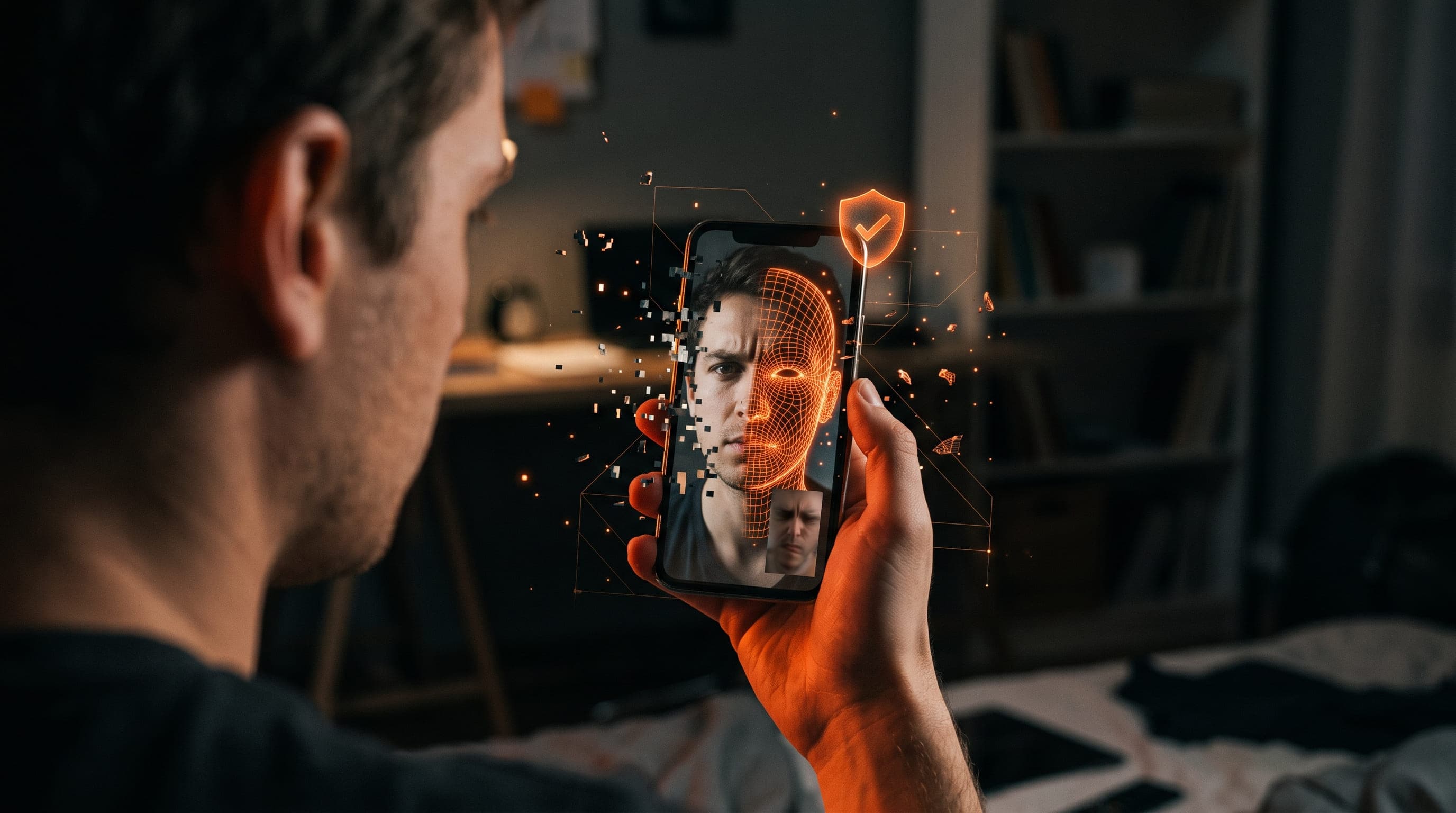
Not long ago, a convincing fake video required a film studio and a team of visual effects artists. Today, a realistic synthetic image can be generated in seconds, and a few short clips of someone's voice can be enough to clone it. Generative AI has made creating content easier than ever. It has also made faking it easier than ever.
These synthetic media, popularly known as deepfakes, are not inherently bad. The same technology powers film dubbing, accessibility tools that give a voice back to people who have lost theirs, and creative work of all kinds. The problem is what happens when synthetic content is used to deceive.
The real-world harms
- Voice-clone scams: criminals imitate the voice of a family member or company executive to request urgent money transfers.
- Non-consensual imagery: fake intimate images used to harass, extort or humiliate, most often targeting women.
- Misinformation: fabricated clips of public figures saying things they never said, timed to spread before they can be debunked.
- Fraud and identity theft: synthetic faces and documents used to get past identity verification checks.
There is also a quieter, longer-term harm. When anything could be fake, it becomes easier to dismiss real evidence as fake too. Researchers call this the "liar's dividend": genuine recordings of wrongdoing can be waved away with a simple "that's AI". Over time, that erodes trust in everything we see and hear.
Why detection alone will not be enough
The obvious response is to build AI that detects AI. Detection tools do help, especially for spotting known manipulation techniques at scale. But they face a fundamental problem: it is an arms race. As generators improve, the tell-tale artefacts that detectors look for disappear, and a detector trained on yesterday's fakes can struggle with tomorrow's.
Instead of only asking "Is this fake?", we are starting to ask "Can this prove where it came from?"
Proving what is real: provenance and watermarking
A more durable approach flips the question around. Instead of only trying to catch fakes, we can attach trustworthy information to genuine content about where it came from and how it was edited.
This is the idea behind content provenance standards such as those developed by the Coalition for Content Provenance and Authenticity (C2PA). Cameras, editing software and AI tools can attach cryptographically signed "content credentials" to a file, recording its origin and edit history. If the credentials are intact, viewers can check them; if they are missing or broken, that is a signal to be more careful.
In parallel, several AI developers are embedding invisible watermarks in the images, audio and text their systems generate, so that the content can later be identified as AI-made. Neither technique is perfect. Credentials can be stripped and some watermarks can be degraded. But together they shift the default from "everything is suspect" towards "verified content is easy to recognise".
Rules are catching up
Lawmakers are responding too. The European Union's AI Act, for example, includes transparency obligations requiring that AI-generated or manipulated content such as deepfakes be disclosed as such. Many other countries are debating similar rules. Regulation will not stop determined criminals, but it does set clear expectations for legitimate companies and platforms.
What you can do today
Technology and law will take time. In the meantime, a few habits go a long way:
- Pause on anything that triggers a strong emotional reaction, especially anger, fear or urgency. That is exactly what manipulators aim for.
- Verify urgent requests through a second channel. If "your brother" calls asking for money, hang up and call him back on a number you know.
- Agree on a family code word that a voice-clone scammer would not know.
- Check the source. Who posted this first? Is it reported by credible outlets?
- Use reverse image search to see where a picture originally appeared.
- Think before you share. Every forward gives a fake more reach.
A responsibility for builders
For those of us who build AI systems, the responsibility goes further. That means designing generation tools with safeguards against impersonation and abuse, adding provenance information and watermarks by default, making it easy to report misuse, and thinking honestly about how a feature could be misused before shipping it.
Generative AI is one of the most creative technologies ever built. Keeping it that way depends on preserving something fragile: our shared ability to tell what is real. Protecting that is a job for engineers, policymakers, platforms and every one of us who hits share.